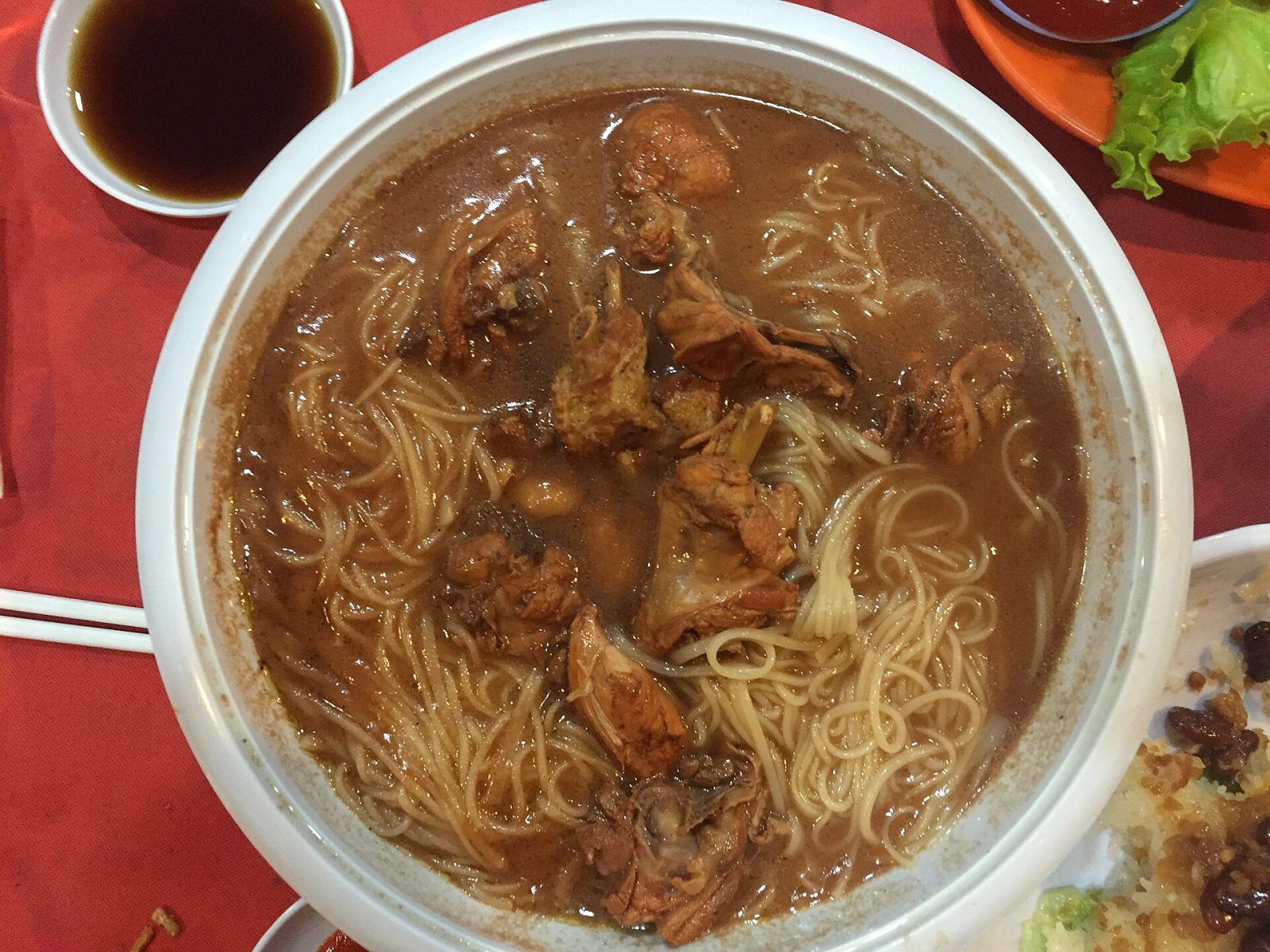
Fuzhou Red Lees Chicken (红糟鸡)
Declassified 22 August 2026
Threat assessment
- 1 No contact Nobody is in danger. Least of all the locals.
- 2 Light resistance A warmth. You mention it. Nobody responds.
- 3 Engaged You are sweating. No one else at the table is sweating.
- 4 Taking fire You have stopped talking. A child has taken your portion.
- 5 Operative down Extraction required. Locals describe this one as "not spicy".
Hongzao ji is the Fuzhou household braise built on hongzao, the crimson lees left behind when red yeast rice wine is brewed, and it is what a Fuzhou family cooks for a birthday. Bone-in chicken marinates in the lees overnight, then braises with ginger, shiitake and dried lily buds in Fujian laojiu until the sauce reduces to a glossy red coating. Its banquet cousin, zuizao ji, is poached and steeped cold rather than braised; this is the version that actually gets made at home. A good one is bright crimson and smells sweetly of wine, never brown and never sour, and that comes down entirely to how you fry the lees. Photo: Ralphscheider42 (CC BY-SA 4.0), via Wikimedia Commons.
// SUPPLY LIST
SCALE:
| AMT | UNIT | ITEM |
|---|---|---|
| 1.2 | kg | Chicken thighs and drumsticks, bone in and skin on, chopped through the bone into 4 cm pieces |
| 90 | g | Red lees (hongzao, 红糟), for the marinade |
| 2 | tsp | Fine sea salt, divided |
| 250 | ml | Fujian red rice wine (Fujian laojiu, 福建老酒), divided |
| 15 | g | Ginger, peeled and finely grated, juice included |
| 25 | g | Dried shiitake mushrooms, whole |
| 15 | g | Dried lily buds (golden needles, 金针菜) |
| 400 | ml | Hot water, about 60°C/140°F, for soaking the mushrooms |
| 45 | g | Lard, or groundnut oil |
| 45 | g | Ginger, peeled and cut into 2 mm coins |
| 60 | g | Red lees (hongzao, 红糟), for frying into the braise |
| 15 | g | Rock sugar, crushed, or caster sugar |
| 2 | stalk | Spring onions, green parts only, cut into 4 cm lengths |
| 1 | tsp | Toasted sesame oil |
| 4 | sprig | Coriander, small sprigs, to garnish |
// OPERATIONS
- 1 Pat the chopped chicken dry and put it in a non-reactive bowl with the 90 g hongzao, 1 tsp of the salt, 2 tbsp (30 ml) of the Fujian laojiu and the 15 g grated ginger with all its juice; massage for a full minute until every surface is coated dull maroon, cover, and refrigerate 8-12 hours or overnight. Use bone-in, skin-on chicken chopped through the bone: boneless breast turns to string in a lees braise and gives the sauce none of the gelatine that makes it cling. If jarred hongzao is genuinely unavailable, blitz 40 g whole red yeast rice to a powder with 150 g sweet fermented glutinous rice (jiuniang) and use 90 g of that; it is a fair stand-in for colour and sweetness but has none of the aged funk of true lees. Do not push the marinade past 24 hours, or the salt and the lees enzymes turn the surface of the meat mealy.
- 2 About 40 minutes before you cook, cover the 25 g dried shiitake with the 400 ml hot water at about 60°C/140°F, weight them under a saucer, and leave 35 minutes until they are pliant all the way through with no hard core at the centre; use hot tap water rather than boiling water, which cooks the outsides slimy while the middles stay tough and flattens the flavour. Soak the 15 g lily buds separately in warm water at about 40°C/105°F for 30 minutes, until a bud bends into a full curve without snapping.
- 3 Squeeze the shiitake out over their bowl, cut away the woody stems and halve any cap wider than 4 cm, then pour the soaking liquid through a fine sieve and stop pouring when you reach the last tablespoon, which is grit; you need 250 ml, and 25 g of mushrooms will have drunk well over a third of the water, so make up any shortfall with hot water rather than squeezing the grit through. Drain the lily buds and pinch off the hard pale nub at the stem end of each one, because it stays woody no matter how long you braise it and it is the single reason people think they dislike lily buds; tie each bud in a loose knot if you want them to stay separate in the sauce.
- 4 Lift the chicken out of its marinade and scrape the clinging lees back into the bowl with the back of a spoon so only a thin film is left on the meat, reserving every scrap of what you scrape off, then let the pieces sit at room temperature for 20 minutes until they no longer feel fridge-cold to the back of your hand. Thick lees left on the chicken carbonises within 90 seconds in a hot pan and takes the whole dish brown and bitter; this is the most common way the recipe is ruined.
- 5 Melt the 45 g lard in a 30 cm carbon steel wok or a 28 cm heavy cast-iron casserole over medium-high heat until it shimmers and a wooden chopstick fizzes steadily around the tip, about 170°C/340°F, then fry the chicken in two batches, skin side down for 2 minutes and then a further minute turning the cut faces through the fat, until the skin is set, opaque and no darker than pale gold at the edges. You are firming the surface, not browning it: a deep Maillard crust fights the lees and tastes wrong here, so pull each batch onto a plate the moment the pieces release from the pan, and never crowd the pan or the chicken steams in its own juices and goes grey and flabby.
- 6 Turn the heat down to medium so the fat drops to around 150°C/300°F and stops shimmering hard, add the 45 g ginger coins and fry 45-60 seconds until fragrant and curling at the edges, then add the 60 g fresh hongzao along with all the lees scraped off the chicken and stir constantly for 60-90 seconds: the paste loosens, the smell turns from sharply sour and yeasty to sweet and warm, and the colour lifts from dull maroon to bright crimson as red fat separates at the edge of the pan. Stop the second it smells sweet. This frying is the entire dish and cannot be skipped, because unfried lees stays sour and greyish, but do not push past two minutes either, as the Monascus pigment scorches to a dull brown-grey that no amount of wine will bring back.
- 7 Return the chicken and any collected juices, toss for 30 seconds until every piece is coated crimson, then pour in 190 ml of the Fujian laojiu, raise the heat to high and let it boil hard and uncovered for 60 seconds, until the raw spirity catch at the back of the nose has gone and what rises off the pan smells sweet and winey. If you cannot find Fujian laojiu, use Shaoxing huadiao plus an extra 1 tsp sugar; it is drier and less floral, and the dish will be good rather than right.
- 8 Add the shiitake, lily buds, the 250 ml strained mushroom liquid, the 15 g rock sugar and the remaining 1 tsp salt so the liquid comes two-thirds of the way up the chicken, topping up with hot water if it does not, which in a wide wok usually means another 100-150 ml, then bring to a boil, drop to the barest simmer at 95-98°C/203-208°F where a bubble breaks only every second or two, cover, and cook 25 minutes. Add no dark soy and no oyster sauce however tempting: the red must come from the lees, and soy turns the sauce a muddy brown and makes it taste like ordinary red-cooked chicken.
- 9 Uncover, raise to a steady medium simmer and cook 8-12 minutes, spooning the sauce over the pieces every couple of minutes, until it has reduced by roughly half and coats the back of a spoon in a thin glossy crimson film, and a skewer pushed into the thickest thigh meets no resistance and releases clear juices with the meat pulling away from the bone but not falling off it; taste the sauce now that it has concentrated and add salt only a pinch at a time, as the lees itself is salted and it is easy to overshoot in the last two minutes. Do not reach for a cornflour slurry; the bones and skin release enough gelatine to body the sauce if you simply give it two minutes longer.
- 10 Take the pan off the heat, splash in the last 2 tbsp (30 ml) of Fujian laojiu and the 1 tsp sesame oil, add the spring onion greens and swirl the pan until the greens just wilt and the surface smells of raw wine again; the final wine goes in off the heat because every aromatic in it would boil straight away, and this late splash is what makes the finished dish smell of the wine rather than merely taste of it.
- 11 Let the pan stand uncovered off the heat for 10 minutes, until the sauce has tightened enough to sit in a pool rather than run when you tilt the pan and the chicken has drawn some of it back in, then scatter over the coriander sprigs and serve hot straight from the pan with plain steamed rice and a plate of blanched greens; for a birthday, Fuzhou families ladle it over xianmian (线面), the fine wheat noodles, and whatever sauce is left the next day belongs on more of the same noodles.